
Save the Bagel: Port Washington students sound alarm on groundwater crisis - by Larissa Fuentes
Click here to view the original article.
On a day dedicated to environmental awareness, a group of Long Island students turned to one of New York’s most recognizable foods to make their point: the future of the region’s water supply could change something as simple, and beloved, as a bagel.
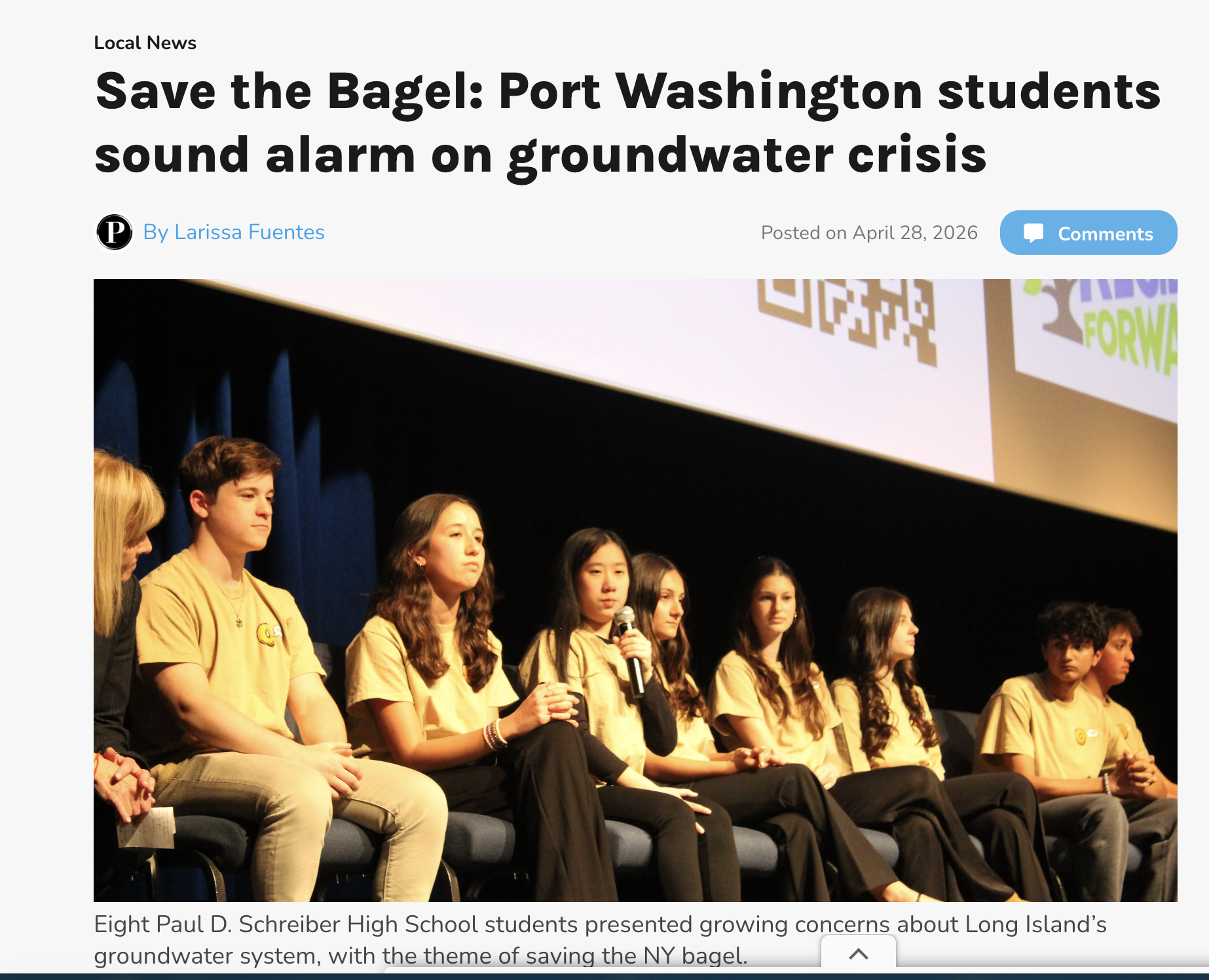
Speaking before a crowd of 200 people on Earth Day, April 22, eight students — Andrea Cheah, Eve Feldman, Ezra Furstenberg, Isabella Falco, Kush Taparia, Max Kreisler, Sophia Leder and Vivian Muller — delivered a fast-paced, 20-minute presentation outlining growing concerns about Long Island’s groundwater system.
The event also marked the official public launch of “LI Groundwater Rebalance 2050,” a regional initiative aimed at addressing water overuse, saltwater intrusion and long-term sustainability.
“What happens to a New York bagel when the water changes?” the students asked at the start of their talk, using the familiar staple to connect a complex environmental issue to everyday life.
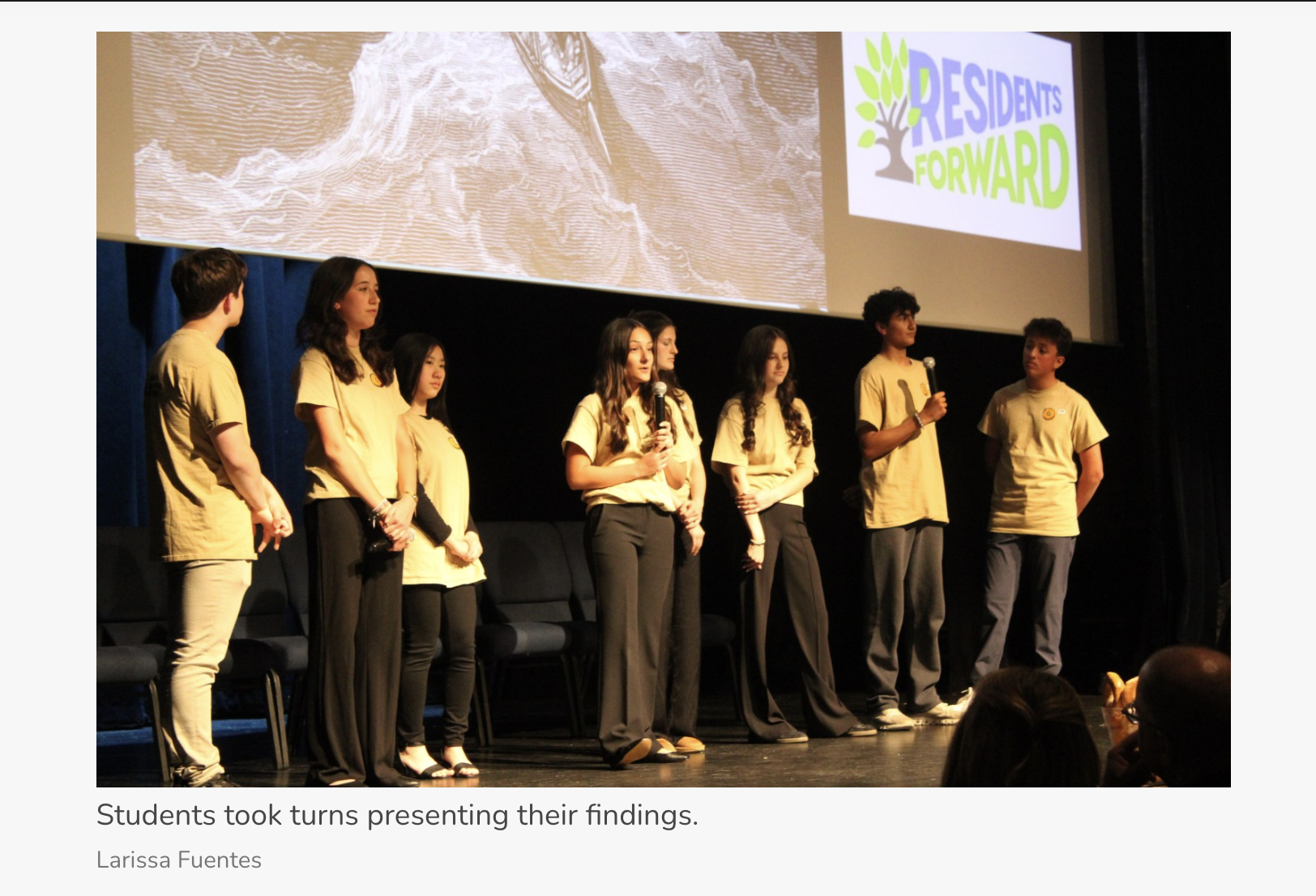
The presentation, held in Port Washington and attended by water suppliers, elected officials and environmental stakeholders, highlighted mounting pressure on Long Island’s sole-source aquifer, the underground system that provides all of the region’s drinking water.
According to the students’ research, Long Islanders use about 140 gallons of water per person each day, significantly higher than the national average. That level of demand, combined with seasonal spikes from lawn irrigation and ongoing development, is placing increasing strain on the aquifer system.
“As we pump more and more water, though, the saute force also draws in some salt water from the bag,” one student said during the presentation. “Eventually, this salt water makes it to our aquifers.”
The process, known as saltwater intrusion, occurs when excessive groundwater pumping allows seawater to move inland and contaminate freshwater reserves. The students warned that rising sea levels and climate change are accelerating the problem, particularly in coastal areas.
“This is not something far away or theoretical,” one student said. “It’s already happening, and it’s getting worse.”
The students’ message combined scientific explanation with a sense of urgency about the future. In one segment, they asked the audience to imagine Long Island in 2050, where water could be increasingly scarce or contaminated.
“Water, water everywhere, but not a drop to drink,” one student said, echoing a literary reference to emphasize the stakes.
Organizers said the student-led effort grew out of a youth climate summit held last year, where participants began working with scientists and water experts. Over months of research, meetings and rehearsals, the group developed the presentation and its central theme, “Save the Bagel,” to make the issue accessible to the broader public.
The event also served as the launchpad for the broader “LI Groundwater Rebalance 2050” initiative, which aims to coordinate efforts across Long Island to restore balance to the aquifer system by mid-century.
Mindy Germain, a Port Washington water commissioner and one of the organizers, said the students played a key role in shaping the initiative.
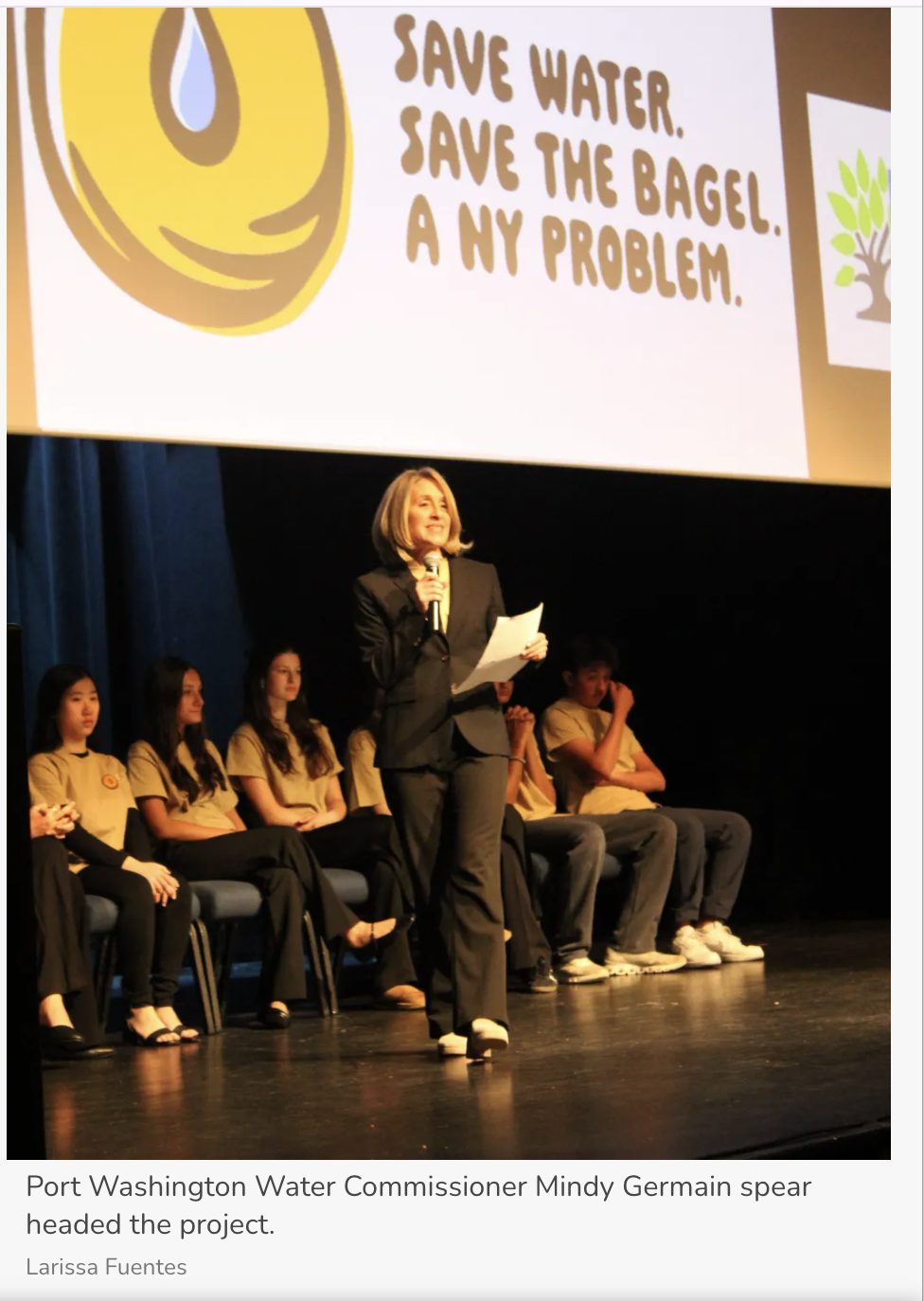
“Our groundwater is out of balance, and saltwater intrusion is advancing,” Germain said. “We know many of the best practices already. What we don’t have is the scale and coordination needed to make a real impact.”
The initiative, developed in collaboration with water suppliers, environmental groups and regional experts, will focus on conservation, infrastructure improvements and public education. Organizers said they plan to build support ahead of future funding cycles, with the goal of implementing large-scale solutions.
Among the strategies highlighted during the presentation were reducing lawn irrigation, switching to native plants, installing smart watering systems and expanding the use of permeable surfaces to allow rainwater to recharge the aquifer.
Students emphasized that outdoor water use, particularly lawn maintenance, is a major driver of demand, especially during the summer months when overall water use can double.
“If your lawn requires constant watering, it’s not a lawn — it’s a lifestyle,” one student said, drawing applause from the audience.
In addition to individual actions, the students called for broader cultural and policy changes to address the issue.
“Education is the most important step,” said Kush Taparia, a ninth-grade student involved in the project. “If one person changes their behavior, then another will, and eventually it becomes the norm.”
Other students stressed that personal responsibility alone will not be enough.
“Individual choices matter, but the biggest changes come from policy,” said Vivian Muller, a 17-year-old participant. “We need systems in place that make water conservation easier and more accessible for everyone.”
The event drew a wide range of attendees, including local officials, water district representatives and environmental organizations, reflecting growing concern about Long Island’s water future as the region approaches peak summer demand.
During a panel discussion following the presentation, officials acknowledged both the scale of the challenge and the importance of public engagement.
Organizers said the “LI Groundwater Rebalance 2050” initiative will seek to unify existing efforts and expand them into a comprehensive, island-wide strategy. Plans include investing in stormwater capture systems, promoting green infrastructure and increasing funding for education and outreach.
“This can’t be done piecemeal anymore,” Germain said. “We need a coordinated approach if we’re going to protect our water for future generations.”
For the students, the goal is not just to inform, but to inspire action.
“We’re not here to scare people,” one presenter told the audience. “We’re here to activate them.”
As the event concluded, attendees were encouraged to support the initiative and continue the conversation in their own communities, a message the students hope will spread far beyond the room.
After all, they said, protecting Long Island’s water isn’t just about preserving a resource. It’s about safeguarding a way of life.